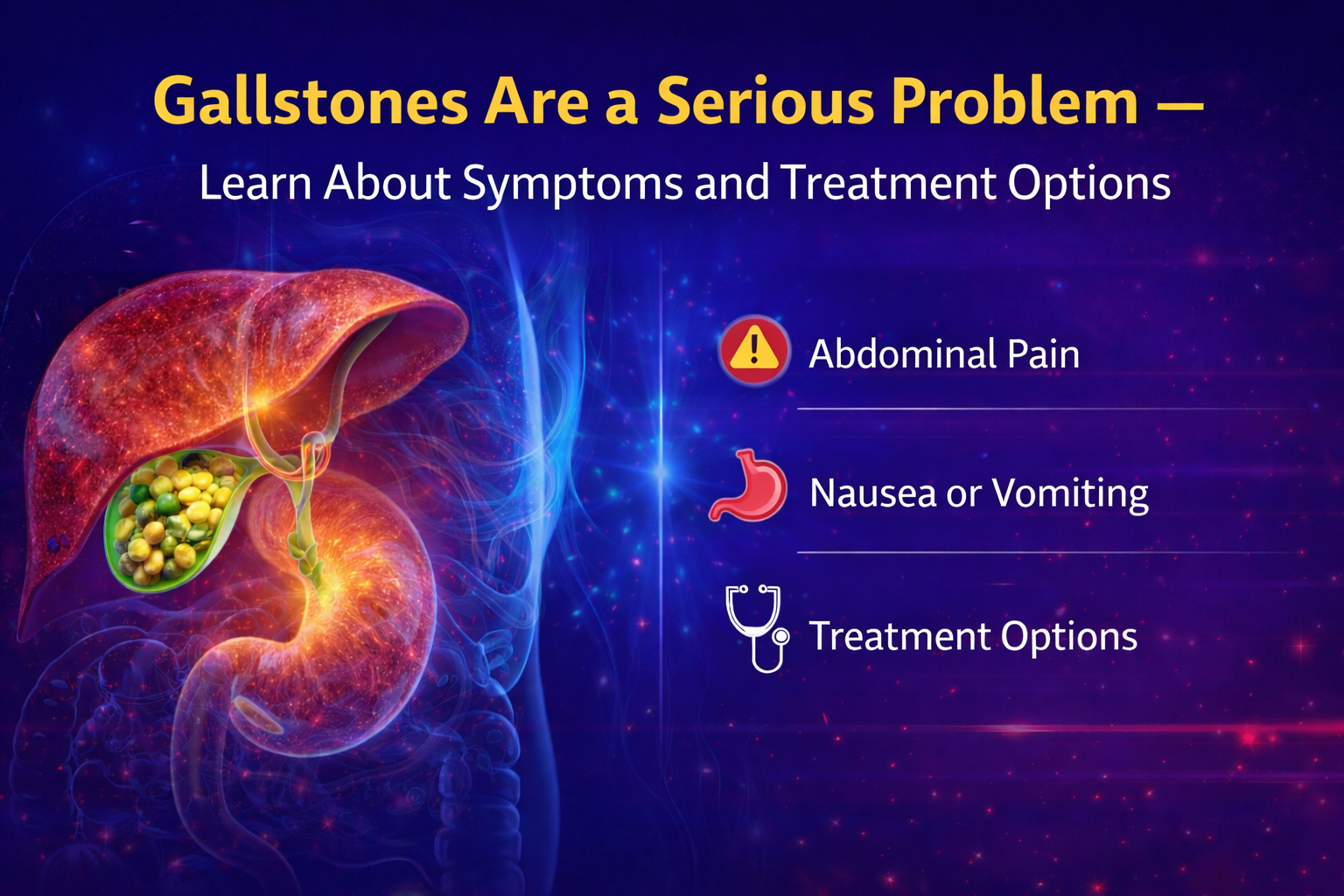
Gallstones are a typical but usually unnoticed health problem, which can have a severe influence on your quality of life. The presence of gallstones can go unnoticed by many people and sudden and sharp pain that requires instant medical care can happen to others. Knowing the nature of gallstones, their symptoms, causes and treatment options can make you make a timely decision before it complicates. This guide will take you through all that you must know in a simple and understandable way.
What Are Gallstones?
Gallstones are deposits hardened in the gallbladder, which is a small organ below the liver. The gallbladder contains bile, which is an acid that aids in the breakdown of fats. Any imbalance of the substances in the bile may cause stones.
Gallstones are of two principal kinds:
1. Cholesterol Stones
These are the most widespread type, mostly of yellow-green color. They develop when the quantity of cholesterol in the bile is greater than the quantity of bile salts necessary to dissolve it. With time the surplus cholesterol crystallizes to form stones.
2. Pigment Stones
These are smaller and darker stones, tending to be black or brown. They consist of surplus bilirubin, a compound that is formed as red blood cells are broken. Pigment stones tend to be more prevalent in individuals with liver disease or some blood disorders.
Common Symptoms of Gallstones
Not all the gallstones lead to symptoms. Nevertheless, upon obstructing a bile passage, they may cause severe pain sometimes referred to as a gallbladder attack.
Key Symptoms Include
- Sharp and intense pain on the right side of the abdomen.
- Back or right shoulder spreading pain.
- Nausea and vomiting
- Gas, indigestion and bloating.
- Fever and chills (with infection)
- Skin or eye (jaundice) yellowing.
The discomfort can take a few minutes to hours and is common following the consumption of fatty foods.
Causes and Risk Factors
Common Causes
The reason why stones develop in the gall bladder is because of an imbalance in the components that constitute the bile. Some common causes include:
- Excess cholesterol in bile
- Abnormal production of bilirubin.
- Poor gallbladder emptying
- Dilute concentration of bile as a result of dehydration.
Risk Factors
There are some things that contribute to the risk of getting gallstones:
- Being overweight or obese
- Rapid weight loss
- Fatty or Cholesterol diet
- Sedentary lifestyle
- Pregnancy
- Age above 40
- Gallstone family history
- Some medical disorders such as diabetes
Due to the hormonal changes, women tend to be more predisposed to forming gallstones than men.
Potential Complications
Gallstones may cause severe complications such as:
- Gallbladder inflammation (cholecystitis)
- Blockage of the bile ducts
- Pancreatitis (inflammation of the pancreas)
- Infection in the bile ducts
- Abdominal cramping with emergency treatment.
These complications may be life-threatening and need urgent medical attention.
How Gallstones Are Diagnosed
Physicians can diagnose gallstones in a number of ways:
Ultrasound:
This is the most widespread and effective test. It includes sound waves to form images of the gallbladder and the existence of stones.
CT Scan:
A CT scan will give detailed pictures of the abdomen and may be able to diagnose complications or other related issues.
Blood Tests:
To indicate signs of diseases, inflammation, or obstruction of the bile ducts, blood tests are conducted to measure liver functions and bilirubin levels.
Treatment Options for Gallstones
Treatment varies with the severity of the symptoms and the size or quantity of stones.
1. Watchful Waiting
Doctors can suggest no immediate treatment, in the event that the gallstones are not causing symptoms. There are so many individuals who have silent gallstones without complications.
2. Medications
Some drugs are used to dissolve cholesterol gallstones. Nevertheless, this technique is very tedious and can take months or even years. It is not typically recommended unless patients are unable to have surgery.
3. Laparoscopic Gallbladder Surgery
It is the easiest and most effective treatment. The gallbladder is excised with small incisions in a minimally invasive procedure. Recovery follows swiftly and majority of the people are able to resume their normal lives in a span of one week.
4. Advanced Minimally Invasive Treatments
Certainly, in certain instances, processes such as endoscopic can be employed to extract stones in the bile ducts and leave the gall bladder intact. These are softer approaches and applicable under certain circumstances.
Prevention Tips
Although some gallstones cannot be prevented, a healthy lifestyle can be taken to decrease your risk dramatically:
- Maintain a healthy weight
- Avoid rapid weight loss
- Eat a healthy diet with a lot of fiber
- Limit fatty and fried foods
- Stay physically active
- Drink plenty of water
- Eat good fats such as omega-3
Healthy habits are also important in avoiding the development of gallstones.
Frequently Asked Questions (FAQ)
1. Are gallstones dangerous?
When they are not symptomatic, gallstones may be harmless. But they may be dangerous and need urgent treatment in case they obstruct the bile ducts or cause inflammation.
2. What triggers gallstone pain?
Gallstone pain is often triggered after consuming fatty or heavy meals. The gallbladder contracts to release bile, and if a stone blocks the duct, it causes intense pain.
3. Can gallstones go away without treatment?
In most cases, gallstones do not disappear on their own. Small stones may pass naturally, but larger ones usually require medical treatment or surgery.
4. Is gallbladder surgery safe?
Yes, laparoscopic gallbladder removal is considered a safe and routine procedure. Complications are rare, and most patients recover quickly without long-term issues.
5. When should I see a doctor for gallstones?
You should consult a doctor if you experience severe abdominal pain, persistent nausea, fever, or jaundice. Early diagnosis and treatment can prevent serious complications.